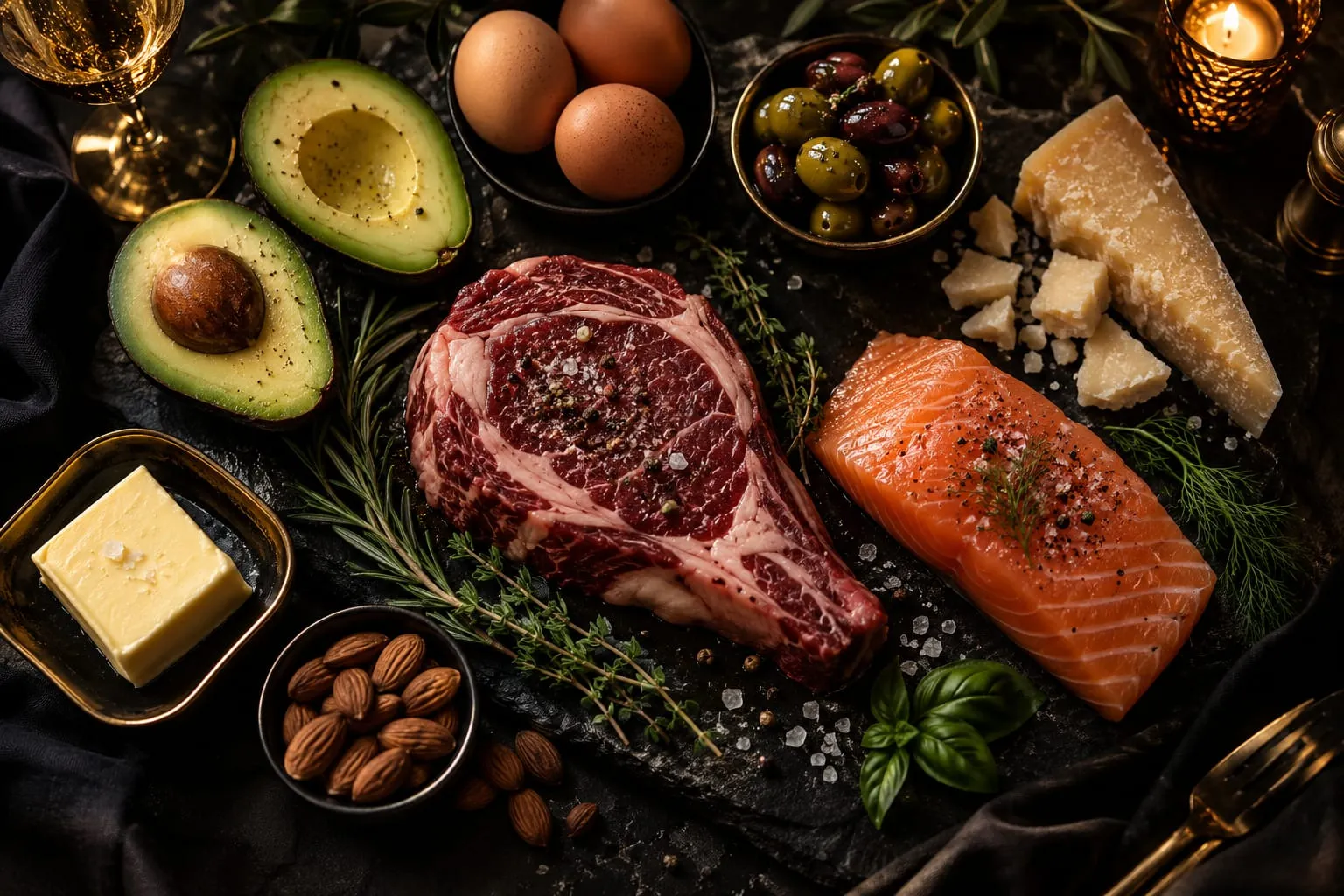
“Macros” is short for macronutrients: the three big nutrients that make up your food. Keto is mostly a conversation about the ratio between them.
The three macros
| Macro | Calories per gram | Where you find it |
|---|---|---|
| Fat | 9 | Butter, oils, cheese, cream, avocado, nuts, fatty fish and meat |
| Protein | 4 | Meat, fish, eggs, dairy, tofu |
| Carbohydrate | 4 | Bread, pasta, rice, fruit, sugar, starchy vegetables, vegetables (in smaller amounts) |
What “typical keto” looks like
By calories, a common split is about:
- 70% fat
- 20 to 25% protein
- 5 to 10% carbohydrate (roughly 20 to 50 grams of net carbs)
On a 1,900-calorie day, that works out to about 150 grams of fat, 110 grams of protein and 20 to 25 grams of net carbs, which is close to what our 28-Day Plan delivers on average.
Net carbs, again
Net carbs are what count. Total carbs − fiber − sugar alcohols (such as erythritol) = net carbs. Our net carb calculator makes this one tap.
How to find your numbers
- Use the keto macro calculator to estimate calories, protein, fat and net carbs.
- Save your targets and use the daily tracker for a couple of weeks.
- Adjust based on how you feel, your energy and your results.
A word on protein
Protein is often misunderstood on keto. You need enough to maintain muscle and feel full, and there is no need to go extreme in either direction. A steady, moderate amount at each meal works for most people.
Do you have to track forever?
No. Many people track for a few weeks to build intuition about portion sizes, then relax. Others prefer a plan where the numbers are done for them. See the 28-Day Plan.