Walk into any conversation about keto and you will hear the phrase “net carbs.” It is the number most people on a ketogenic diet actually count, and it is simpler than it sounds.
The short version
Net carbs = total carbohydrates − fiber − sugar alcohols (like erythritol).
The logic: your body does not digest fiber into sugar, and some sugar alcohols are mostly not absorbed, so they do not raise blood sugar much. The carbs that remain are the ones that count.
Example: a cup of broccoli
One cup of chopped raw broccoli has roughly 6 grams of total carbohydrates and 2.4 grams of fiber. That gives about 3.6 grams of net carbs. Compare that with a slice of white bread, which has roughly 13 grams of total carbs and less than 1 gram of fiber, so about 12 grams of net carbs.
| Food (typical serving) | Total carbs | Fiber | Net carbs |
|---|---|---|---|
| Avocado, ½ medium | 6 g | 5 g | ~1–2 g |
| Spinach, 2 cups raw | 2 g | 1 g | ~1 g |
| Cauliflower, 1 cup | 5 g | 2 g | ~3 g |
| Brussels sprouts, 1 cup | 8 g | 3 g | ~5 g |
| Raspberries, ½ cup | 7 g | 4 g | ~3 g |
| Almonds, 1 oz | 6 g | 3.5 g | ~2.5 g |
| Slice of white bread | 13 g | <1 g | ~12 g |
Values are approximate and vary by brand and ripeness.
A note on sugar alcohols
Many “keto” products are sweetened with sugar alcohols. They are not all equal:
- Erythritol: mostly not absorbed; generally counted as zero net carbs.
- Allulose: a rare sugar that is largely not metabolized; typically counted as zero.
- Xylitol: partially absorbed, so subtract about half if you want to be careful. It is toxic to dogs, so keep it away from pets.
- Maltitol and sorbitol: absorbed more, can spike blood sugar and cause digestive upset. Be skeptical of products that subtract all of it.
Reading labels critically matters. A bar that claims “2 net carbs” after subtracting 20 grams of maltitol may not behave like a 2-carb food.
How many net carbs should you eat?
Most ketogenic plans stay between roughly 20 and 50 grams of net carbs a day. A stricter limit (20 grams or less) is common at the start, and some people can stay in ketosis at higher intakes. The right number depends on your goals, body and activity level, and the safest approach is to discuss it with your doctor. You can get a personalized estimate with our free keto calculator.
Tips for tracking
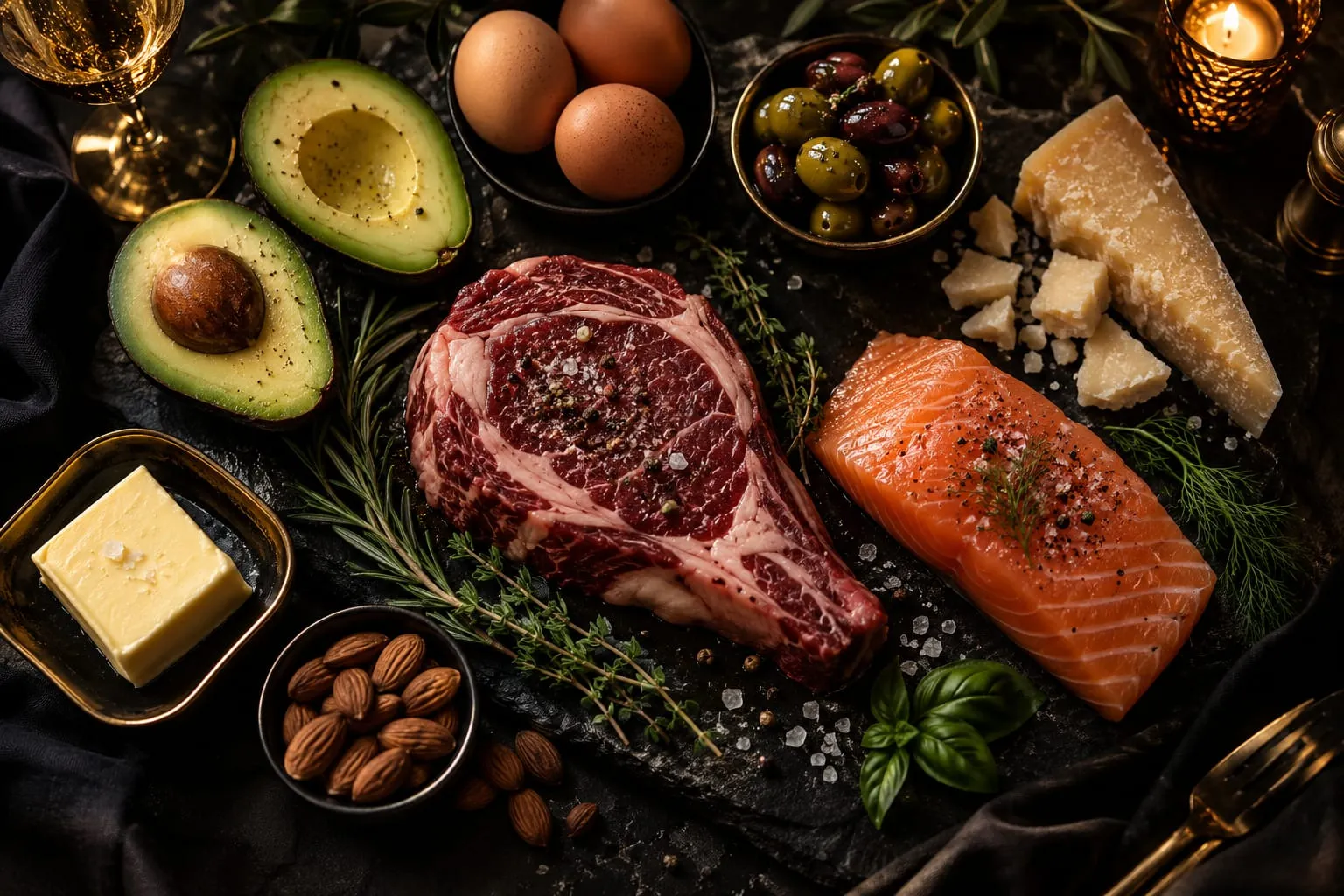
- Start with whole foods. Meat, fish, eggs, non-starchy vegetables and healthy fats are mostly zero or low in net carbs, and they do not need much counting.
- Count the small stuff. A tablespoon of ketchup, a splash of cream in your coffee and a handful of nuts add up faster than you think.
- Use a consistent source. Choose one nutrition database or app, and stick with it so your numbers are comparable.
- Check your recipes. Every recipe on this site lists net carbs per serving, calculated from standard ingredient data. See the Brussels sprouts and creamed spinach recipes for examples.
Is counting net carbs necessary?
Not forever. Many people count for a few weeks to get a feel for portion sizes, then eyeball it. If you prefer to skip the math entirely, a meal plan where the numbers are already calculated does the counting for you.
Skip the math
The Black Tie Keto 28-Day Plan has the macros calculated for every meal and every day, so you can just cook and eat.
See the 28-Day PlanNutrition values are approximate. This guide is general information, not medical advice. Please talk to your doctor before starting a ketogenic diet; see our health disclaimer.