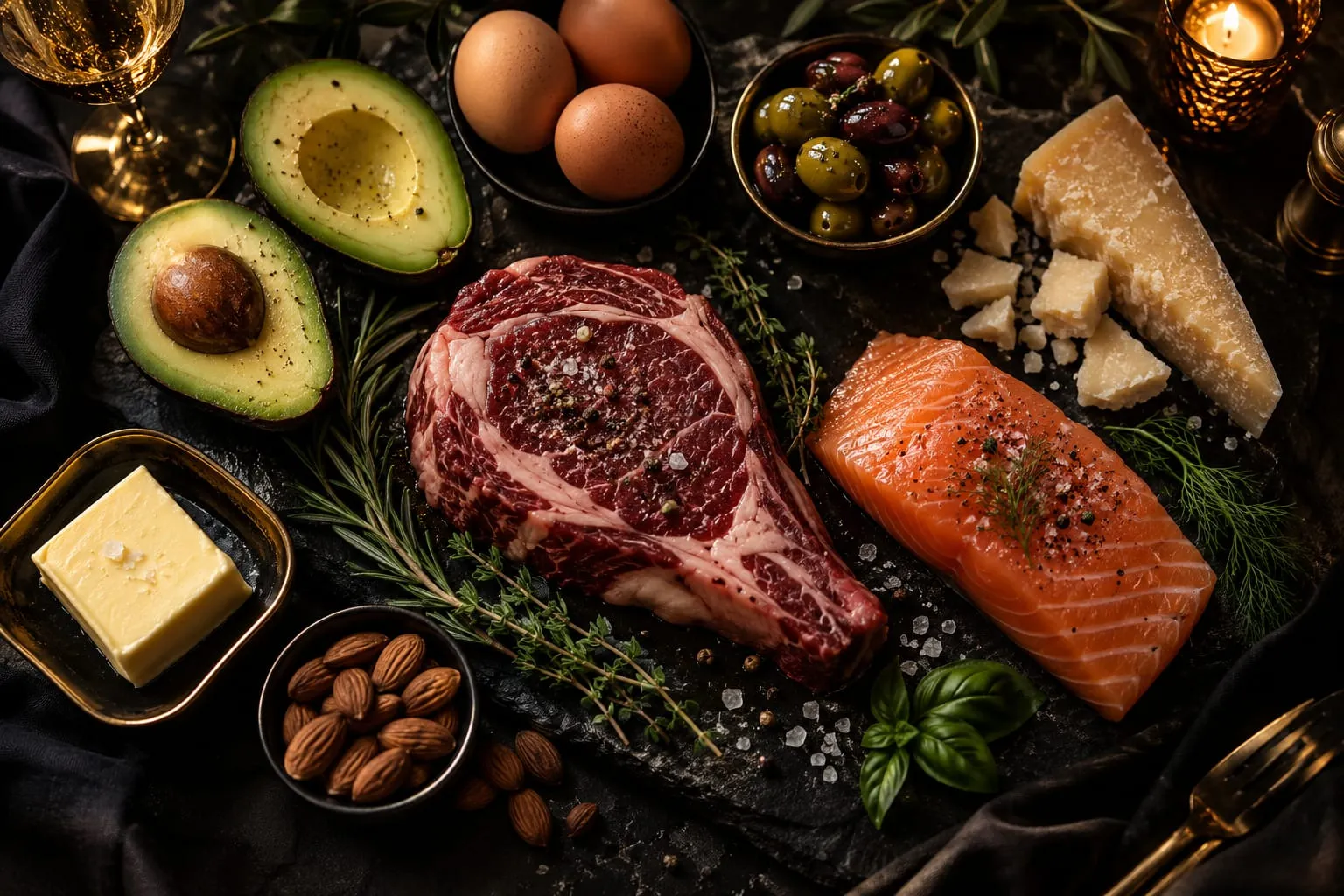
A ketogenic diet (“keto”) is a way of eating that is very low in carbohydrates, moderate in protein and higher in fat. Instead of getting most of your energy from bread, pasta, rice, sugar and fruit, you get it from foods like meat, fish, eggs, cheese, butter, olive oil, nuts and non-starchy vegetables.
The core idea
Your body prefers to burn glucose, the sugar that carbohydrates break down into. When you eat far fewer carbs, glucose becomes scarce. After a few days your liver starts converting fat into molecules called ketones, which your brain and muscles can use for fuel. That state is called ketosis.
What a keto plate looks like
- Protein: steak, chicken, fish, shellfish, eggs.
- Fat: butter, olive oil, avocado, cream, cheese, nuts.
- Vegetables: leafy greens, broccoli, cauliflower, zucchini, asparagus, mushrooms.
- What shrinks: bread, pasta, rice, potatoes, sugar, sweet drinks, most fruit and most processed snacks.
The numbers
Most keto plans keep net carbs between roughly 20 and 50 grams a day. Net carbs are total carbohydrates minus fiber (and, for some sweeteners, sugar alcohols). The rest of your calories come from protein and fat. Our net carb calculator and macro calculator do the arithmetic.
What keto is, and is not
Keto is an eating pattern that many people enjoy because it is satisfying and simple to explain. It is not a medical treatment you should start on your own, and it is not safe for everyone. The next lesson covers who should talk to a doctor first.
Your homework
Open the food explorer and search three foods you eat every week. Notice which ones are keto-friendly and which surprised you.